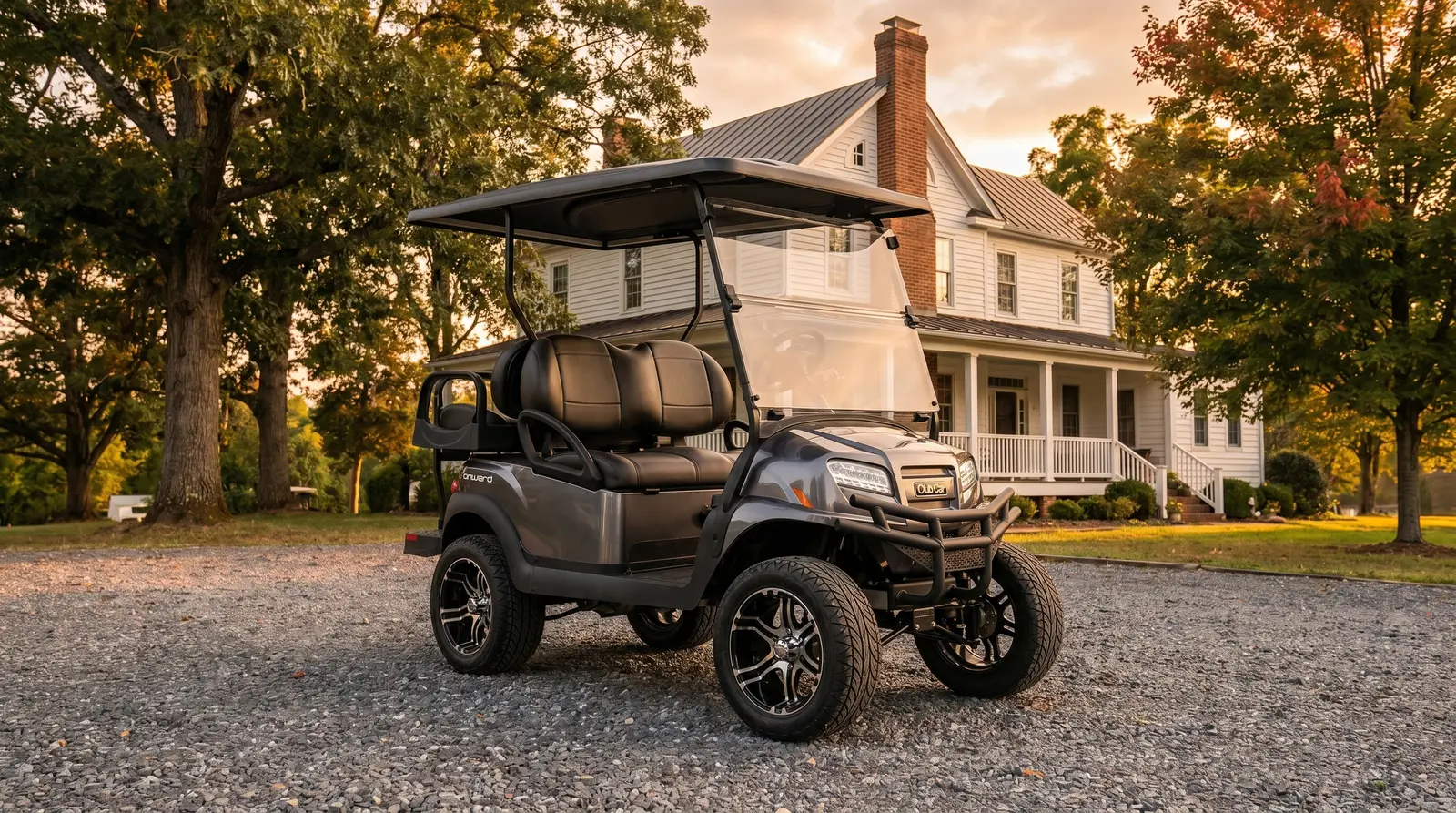

On an electric cart, the battery is the heart of the thing, and the choice between lithium and traditional lead-acid changes how the cart drives, how long it lasts, and what you spend over time. Here is the straight comparison.
A Club Car rep once told one of our customers he only recommends our shop for battery conversions. We take batteries seriously, because getting this right is the difference between a cart you love and one that frustrates you.
Lifespan and maintenance
Lead-acid batteries are proven and cheaper up front, but they need maintenance: checking and topping off water, keeping terminals clean, and charging habits matter. Cared for well, a pack lasts a handful of years; neglected, it dies fast.
Lithium batteries are essentially maintenance-free — no watering, no terminal fuss — and they typically last much longer, often two to three times the cycle life of lead-acid. Over the life of the cart, that longevity offsets a lot of the higher purchase price.

Range, weight, and performance
Lithium packs are far lighter, which makes the cart quicker and easier on tires and suspension, and they hold voltage better as they discharge — so the cart does not feel sluggish near the end of a charge the way lead-acid can.
Lithium also charges faster and can be charged partially without harm, while lead-acid prefers full charge cycles. For longer runs and hilly Valley terrain, lithium's consistent power is a real advantage.
Cost: the honest math
Lead-acid wins on the day you buy it. Lithium wins over the years you own it, through longer life, zero maintenance, and better performance. If you keep your cart a long time and use it regularly, lithium usually pays for itself.
If you are budget-focused and drive lightly, a good lead-acid pack is perfectly sensible. We will tell you honestly which makes sense for your usage rather than upselling a battery you do not need.
Common questions
Are lithium golf cart batteries worth it?
For most regular users, yes. Lithium batteries last two to three times longer than lead-acid, need no maintenance, charge faster, and give more consistent power. The higher up-front cost is usually offset over the life of the cart.
How long do golf cart batteries last?
Lead-acid golf cart batteries typically last several years with proper care, while lithium batteries often last much longer. Charging habits, maintenance, and how often the cart is used all affect lifespan.
Can you convert a golf cart from lead-acid to lithium?
Yes. Many electric carts can be converted from lead-acid to lithium. It is best done by an experienced shop to match the battery, charger, and cart correctly — Valley View handles lithium conversions in-house.
Talk to a real person
Still deciding? We’ll help.
No pressure, no sales pitch — just straight answers from the family that has sold and serviced carts in the Valley since 2003.
Written and reviewed by Valley View Golf Carts — a family-owned dealer that has sold, financed, and serviced carts in Penn Laird, VA since 2003. Have a correction or a question? Call us at 540-574-3345.
Keep reading
Gas vs. Electric Golf Carts: Which Is Right for You?
The honest trade-offs between gas and electric carts, and how to pick for the way you actually ride in the Valley.
How to Winterize Your Golf Cart in the Shenandoah Valley
Valley winters are real. A few steps in the fall protect your battery and keep the cart ready for spring.