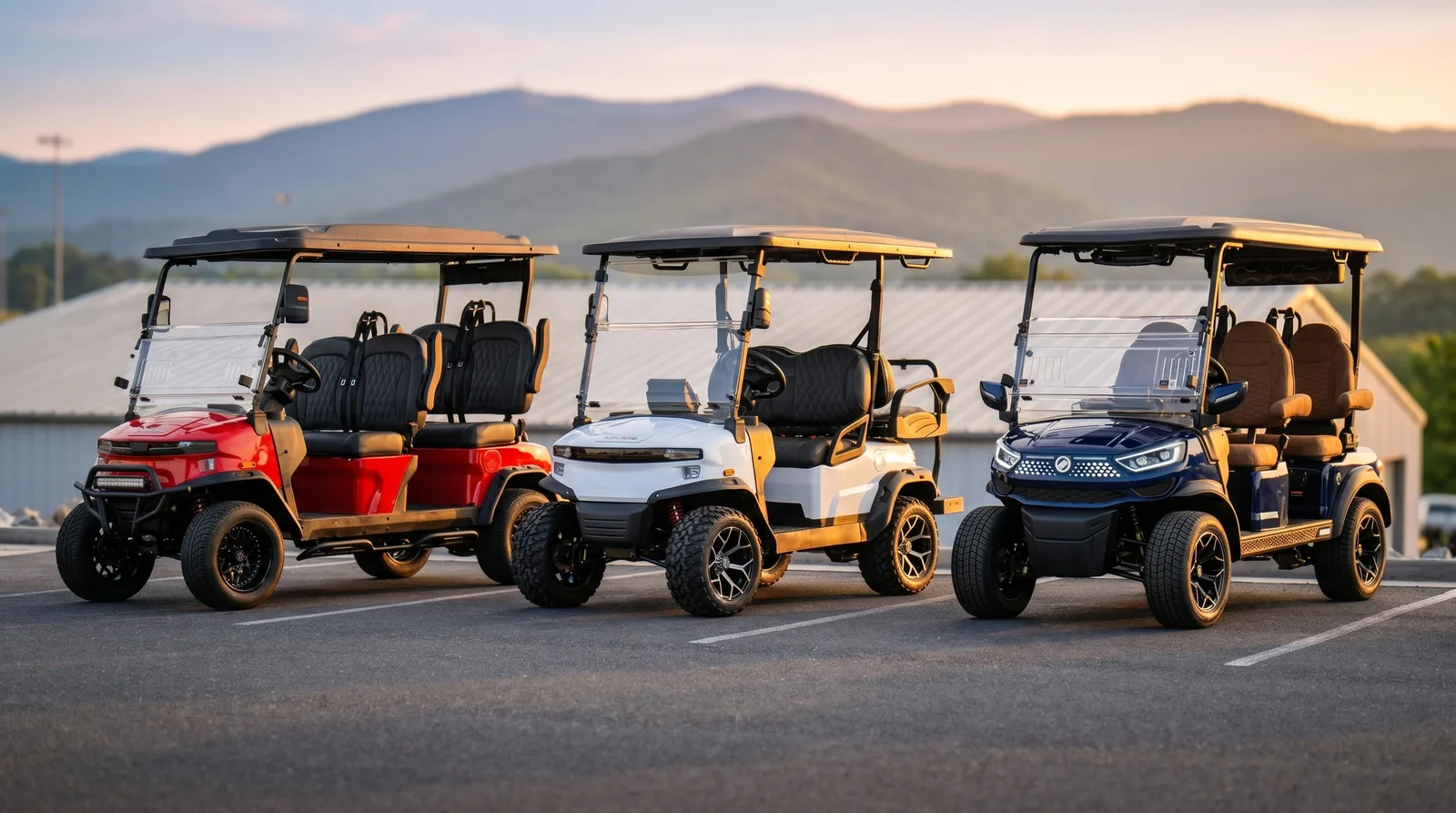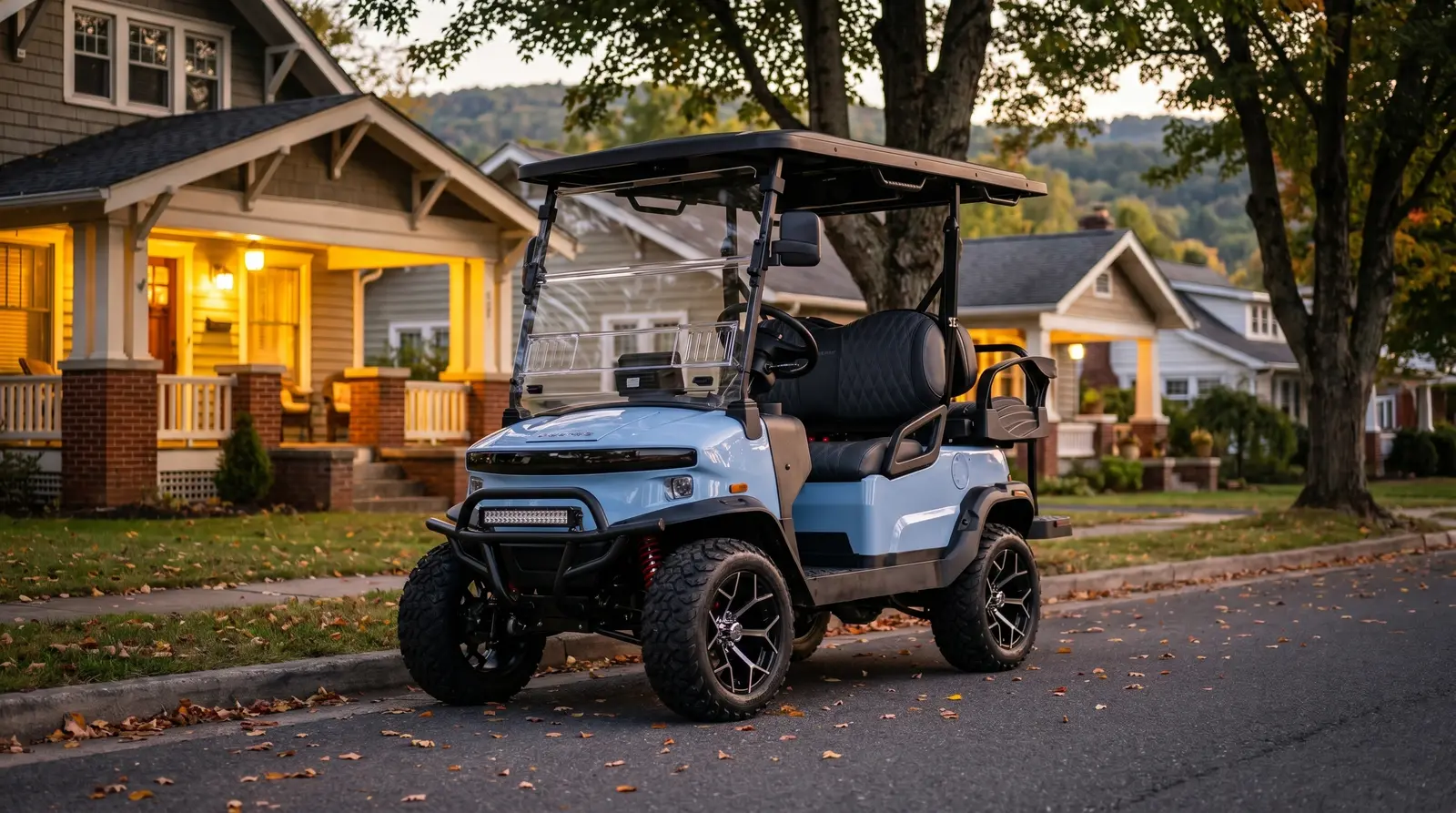

It is the first question almost every buyer asks us: gas or electric? There is no single right answer — it depends on how far you drive, where you charge, how much you want to maintain, and whether quiet matters. Here is how we talk it through with customers at the showroom.
The short version: most neighborhood and property buyers are happiest on a modern electric (especially lithium) cart, while a smaller group with long daily runs or no easy charging still prefer gas. Below is the full picture.
Electric carts: quiet, cheap to run, low maintenance
Electric carts are near-silent, produce no fumes, and cost only a few cents of electricity to charge. There is no oil to change, no belts, no carburetor — far fewer moving parts to maintain. For neighborhood driving, getting around a property, and golf, that simplicity is hard to beat.
The trade-off is range and charging. A standard lead-acid electric cart goes roughly 20 to 30 miles on a charge; a modern lithium cart can go further and charges faster. Either way, you need somewhere to plug in. For most people that is a garage outlet overnight, which is no inconvenience at all.
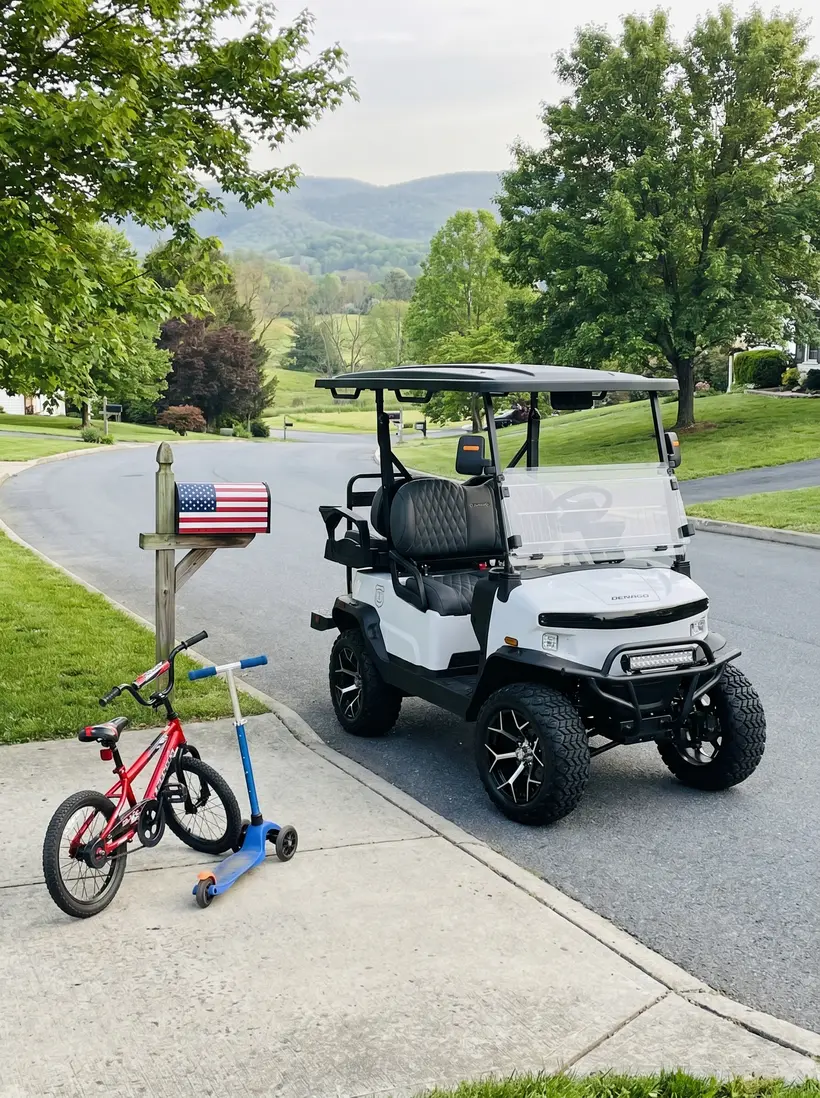
Gas carts: long range, fast refueling, more power
A gas cart can run all day and refuel in two minutes from a gas can, with no charging to plan around. They tend to have more torque for hauling and climbing, which matters on hilly property or for heavy loads. If you put down serious miles every day, or you have nowhere convenient to charge, gas still makes sense.
The trade-offs are noise, fumes, and maintenance. Gas carts are louder, they smell, and they need the same kind of upkeep as a small engine — oil, filters, belts, and tune-ups. That is real ongoing cost and effort that electric owners simply do not have.
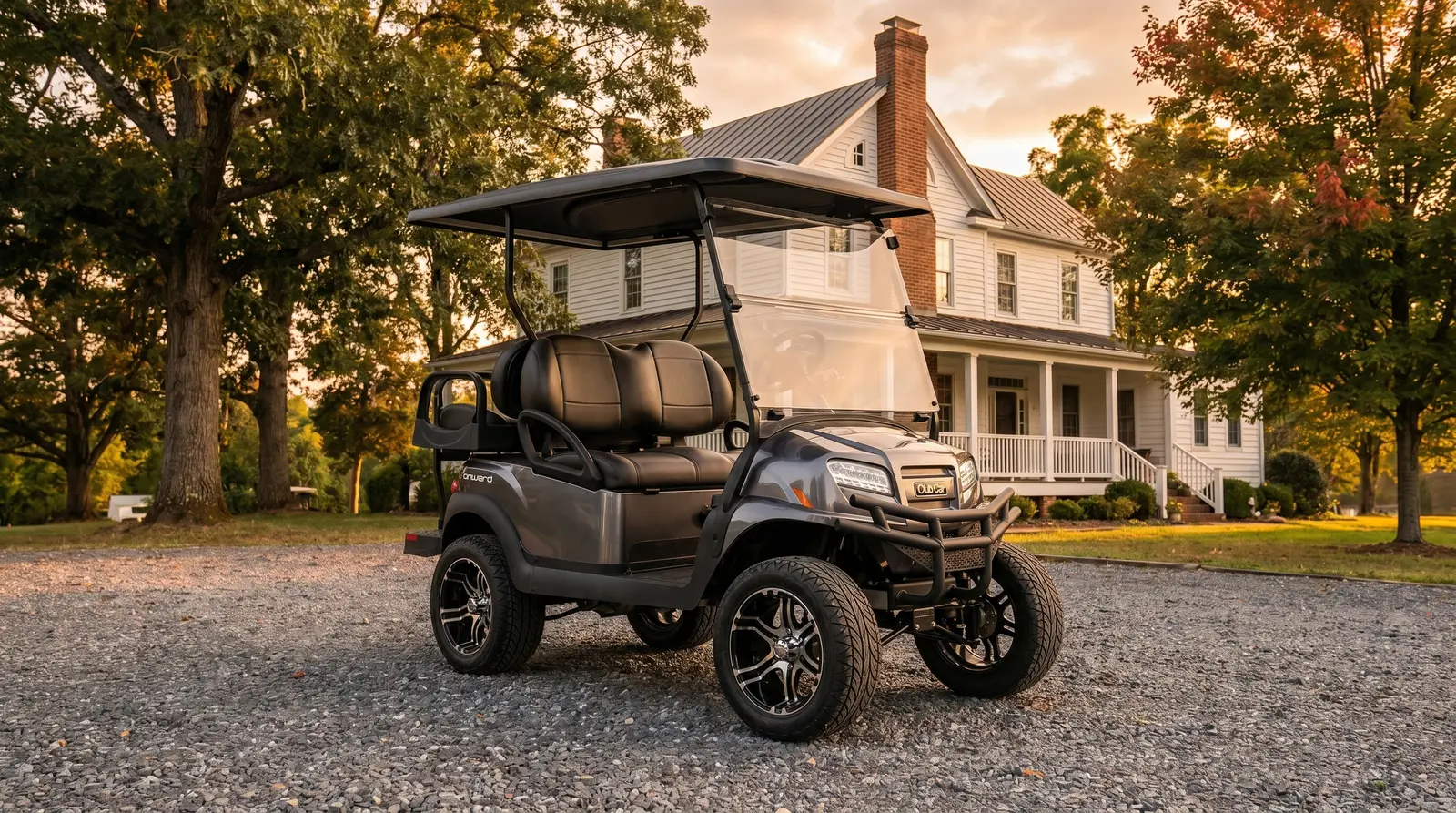
How we'd choose
Driving around a neighborhood, a campground, or up to the clubhouse, and you can charge at home? Go electric — and if the budget allows, lithium, for the lighter weight, longer range, and longer battery life.
Covering long distances daily, working hilly acreage with heavy loads, or with no good place to charge? A gas cart earns its keep. When you are not sure, come drive both — five minutes behind the wheel usually settles it.
Common questions
Are electric golf carts cheaper to run than gas?
Yes. An electric golf cart costs only a few cents of electricity per charge and has no oil, belts, or tune-ups, so it is significantly cheaper to operate and maintain than a gas cart over its life.
How far can an electric golf cart go on one charge?
A standard lead-acid electric cart typically travels about 20 to 30 miles per charge. A lithium-battery cart can often go farther and recharges faster, depending on the model, terrain, and load.
Is a gas or electric golf cart better for hills?
Gas carts generally have more torque for steep hills and heavy hauling, but many modern lithium electric carts handle Valley hills very well. For hilly property with heavy loads, test both before deciding.
Talk to a real person
Still deciding? We’ll help.
No pressure, no sales pitch — just straight answers from the family that has sold and serviced carts in the Valley since 2003.
Written and reviewed by Valley View Golf Carts — a family-owned dealer that has sold, financed, and serviced carts in Penn Laird, VA since 2003. Have a correction or a question? Call us at 540-574-3345.