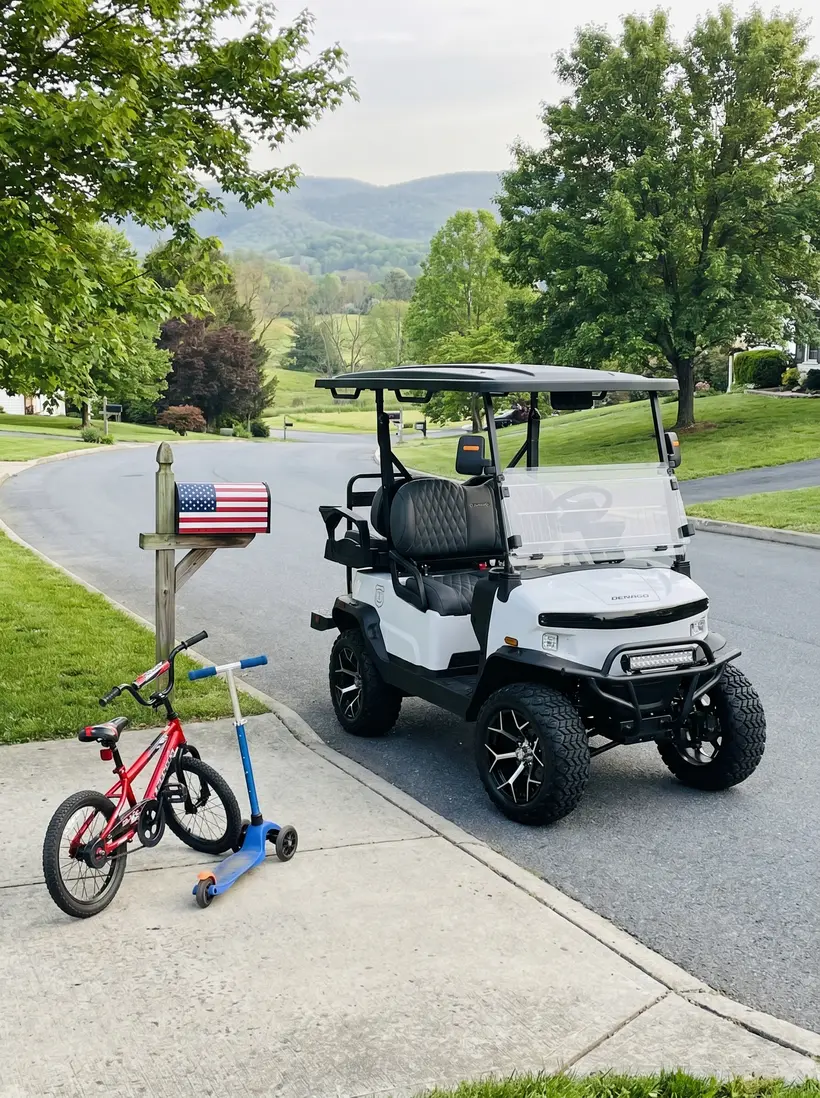

This comes up constantly, and the answer is: sometimes, and only under specific conditions. Virginia does allow golf carts on certain public roads, but it depends on your local ordinance and on the cart meeting equipment rules. Here is a plain-English overview — always confirm the details with your town or county and the Virginia DMV before you drive on the road.
It also helps to know the difference between a standard golf cart and a low-speed vehicle (LSV), because they are treated very differently under the law.
Golf carts vs. low-speed vehicles (LSVs)
A standard golf cart is generally limited to around 15 to 19 mph. A low-speed vehicle (LSV) is a different legal class: it is capable of 20 to 25 mph and is built with added safety equipment — headlights, brake lights, turn signals, mirrors, seat belts, a windshield, and a VIN.
That distinction matters because in Virginia an LSV can be titled, registered, and insured to operate on roads with a speed limit of 35 mph or less, much like a vehicle. A plain golf cart's road use is far more restricted and depends on a local ordinance allowing it.
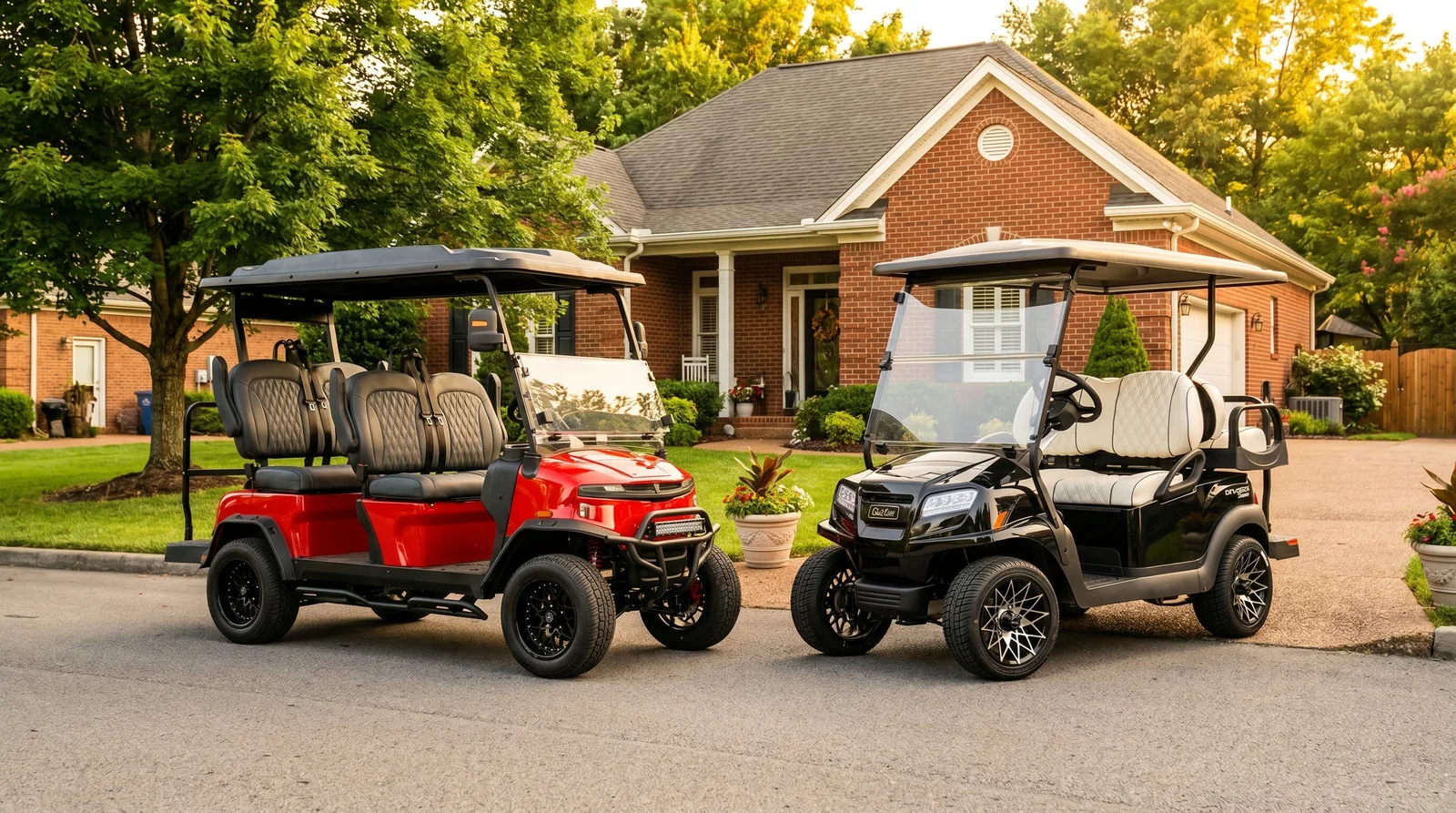
When a golf cart can be driven on the road in Virginia
Virginia law lets localities pass an ordinance permitting golf carts on designated public highways, typically where the speed limit is 25 mph or less, and usually only crossing a higher-speed road at a clearly marked point. Without that local ordinance, golf carts are generally not allowed on public roads.
Where it is allowed, the driver normally must hold a valid driver's license, operate during daylight unless the cart has proper lights, and the cart must have working brakes and the equipment the locality requires. Rules vary from town to town, so check your specific locality.
Getting set up the right way
If your goal is real road use, an LSV (or a cart upgraded and titled appropriately) is usually the cleaner path, because the registration and insurance route is well defined. For neighborhood and property use off public roads, a standard cart is perfectly fine and far simpler.
We are happy to talk through what is and is not allowed where you live, and to point you toward the right setup. We do not give legal advice — final word always comes from your locality and the VA DMV — but we have helped a lot of Valley customers get road-ready correctly.
Common questions
Can you drive a golf cart on the road in Virginia?
Only where a local ordinance allows it, generally on roads with a speed limit of 25 mph or less and in daylight (or with proper lights). The driver must be licensed and the cart must have working brakes. Without a local ordinance permitting it, golf carts are not allowed on public roads.
What is the difference between a golf cart and a low-speed vehicle in Virginia?
A golf cart is limited to roughly 15 to 19 mph and has restricted road use. A low-speed vehicle (LSV) reaches 20 to 25 mph, carries added safety equipment and a VIN, and can be titled, registered, and insured to drive on roads posted 35 mph or less.
Do you need a license and insurance for a golf cart in Virginia?
To drive a golf cart on a permitted public road you generally need a valid driver's license. A low-speed vehicle must also be titled, registered, and insured. Always confirm the current requirements with your locality and the Virginia DMV.
Talk to a real person
Still deciding? We’ll help.
No pressure, no sales pitch — just straight answers from the family that has sold and serviced carts in the Valley since 2003.
Written and reviewed by Valley View Golf Carts — a family-owned dealer that has sold, financed, and serviced carts in Penn Laird, VA since 2003. Have a correction or a question? Call us at 540-574-3345.
Keep reading
How Much Does a Golf Cart Cost in 2026?
A realistic price breakdown for new and used carts, what drives the cost, and where the value really is.
Gas vs. Electric Golf Carts: Which Is Right for You?
The honest trade-offs between gas and electric carts, and how to pick for the way you actually ride in the Valley.