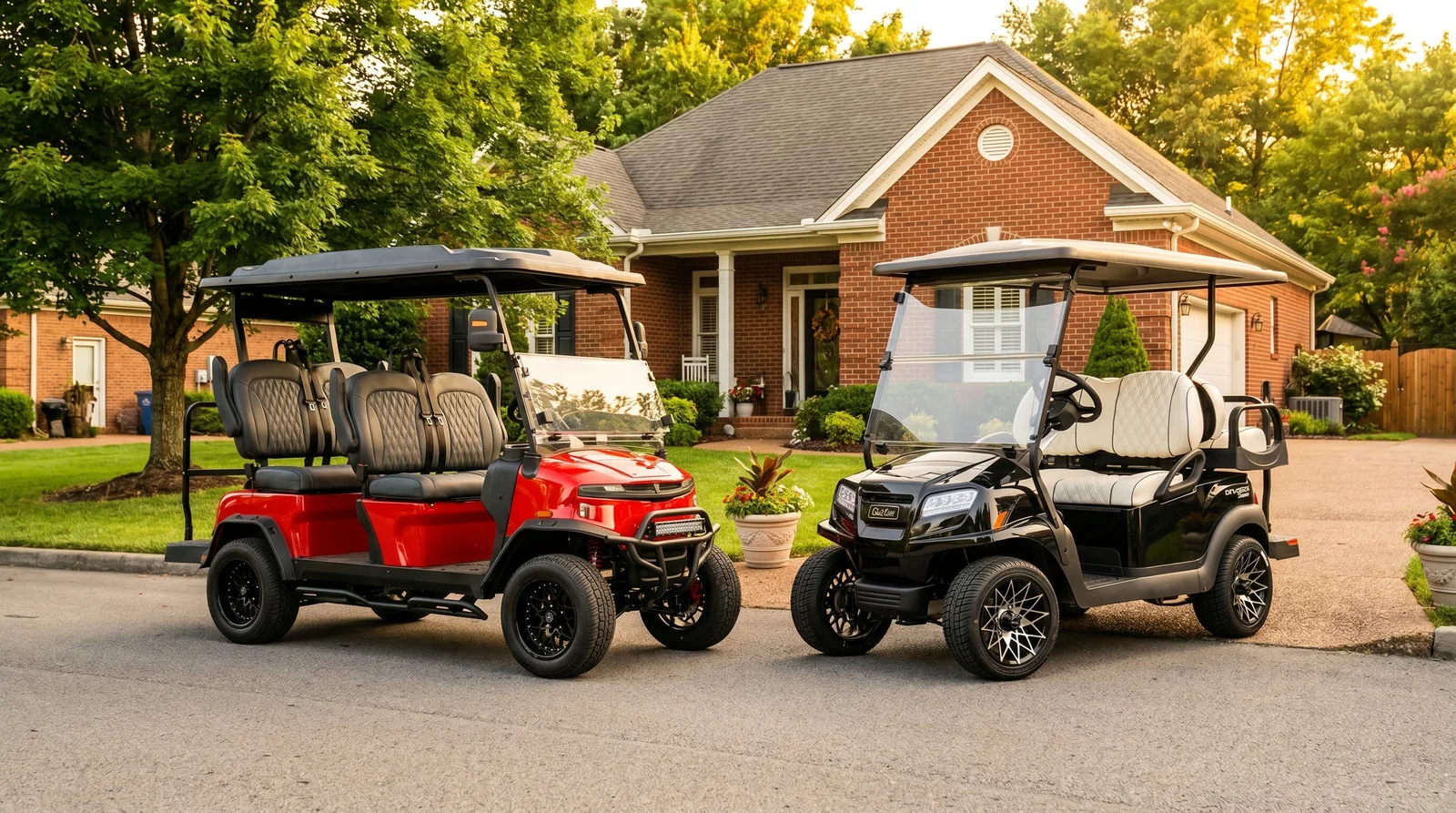

A new cart and a clean used cart can both be great buys — or expensive mistakes — depending on what you are after and where you buy. The decision usually comes down to budget, how long you plan to keep it, and how much risk you want around the battery and the unknowns of a used machine.
We sell both, and we have no reason to push you one way or the other, so here is the honest framework we use with customers.
When new makes sense
Buy new when you want the latest features, a full factory warranty, and zero history to worry about — especially the battery, which is the single most expensive component on a cart. A new lithium cart in particular can outlast several sets of old lead-acid batteries, which changes the long-run math.
New is also the easier path if you want a specific color, trim, or build, or you simply do not want to spend your first season chasing down a previous owner's deferred maintenance.
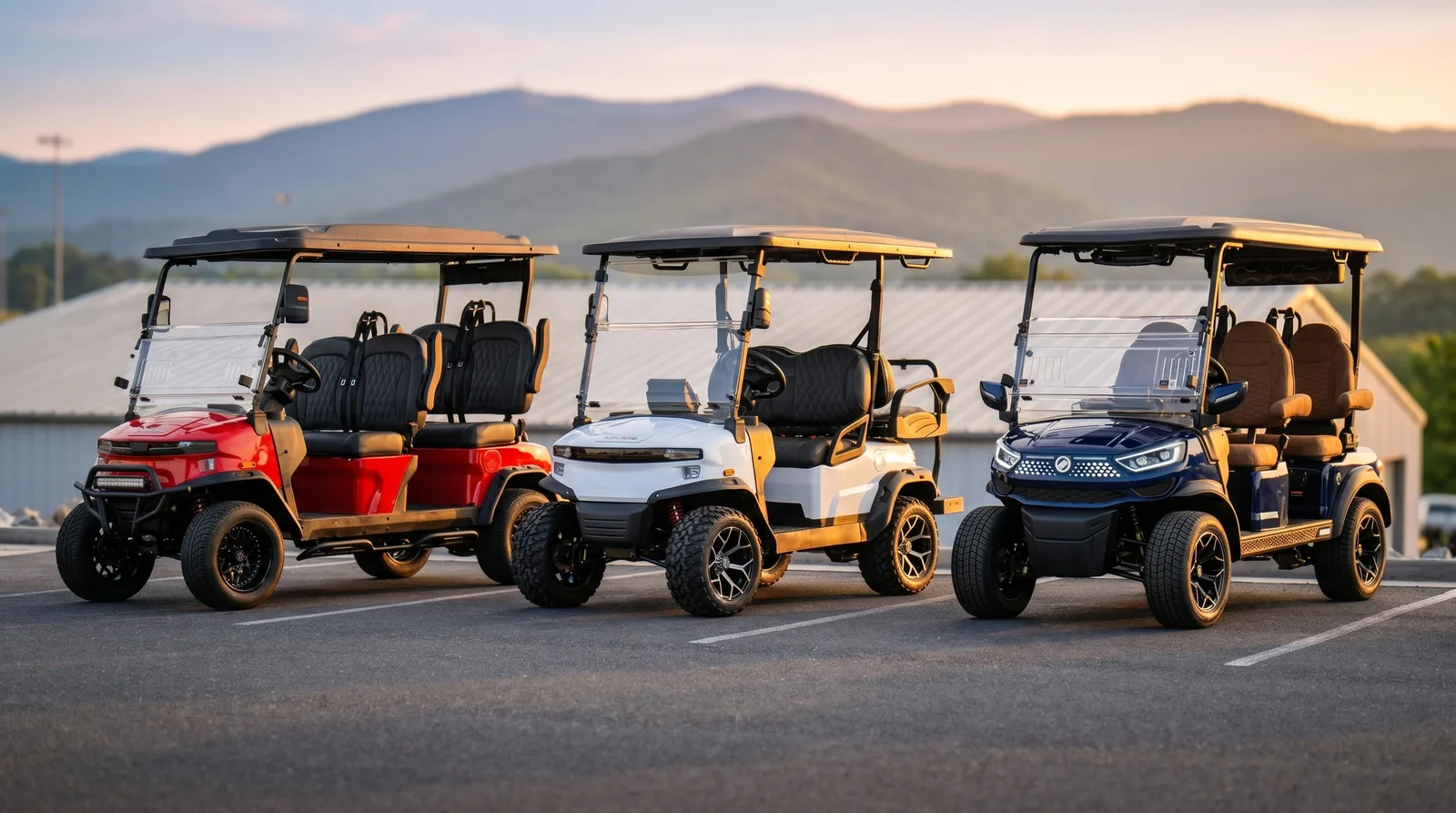
When used is the smarter buy
A well-kept pre-owned cart can deliver most of the experience for meaningfully less money — a great fit if you are on a budget, buying a second cart, or not sure how much you will use it yet. The key word is well-kept: the deal is only good if the cart was maintained and the batteries have real life left.
That is exactly why we recondition and stand behind the used carts we sell, rather than flipping whatever shows up. A used cart from a dealer who serviced it is a very different purchase than a Marketplace gamble.
How to inspect a used cart
Check the batteries first — their age and condition drive the value. Ask when they were replaced, look for corrosion, and on a test drive watch whether the cart holds power up an incline rather than sagging. A fresh set of batteries can be a third of the cart's value, so a tired set is a real cost, not a footnote.
Then look at the basics: tire wear, brakes, steering play, lights, and any signs of hard use or water damage. If you cannot evaluate all that confidently, buying from a dealer who already did — and who will service it after — is worth the difference in price.
Common questions
Is it better to buy a new or used golf cart?
Buy new for the latest features, a full warranty, and a fresh battery with no history to worry about. Buy used to save money when the cart was well maintained and the batteries have real life left. A reconditioned cart from a dealer is far lower-risk than a private-party used cart.
What should I check when buying a used golf cart?
Check the battery age and condition first, since batteries are the most expensive component. Then inspect tires, brakes, steering, and lights, and on a test drive confirm the cart holds power up a hill. Buying from a dealer who reconditioned and will service the cart reduces the risk.
How long do golf cart batteries last?
Lead-acid golf cart batteries typically last about 4 to 6 years with good care, while lithium batteries often last well over 8 to 10 years. Because a replacement set can be a large share of a used cart's value, battery condition is central to whether a used cart is a good buy.
Talk to a real person
Still deciding? We’ll help.
No pressure, no sales pitch — just straight answers from the family that has sold and serviced carts in the Valley since 2003.
Written and reviewed by Valley View Golf Carts — a family-owned dealer that has sold, financed, and serviced carts in Penn Laird, VA since 2003. Have a correction or a question? Call us at 540-574-3345.
Keep reading
How Much Does a Golf Cart Cost in 2026?
A realistic price breakdown for new and used carts, what drives the cost, and where the value really is.
Lithium vs. Lead-Acid Golf Cart Batteries
The real differences in range, lifespan, maintenance, and cost — and which one is worth it.
Gas vs. Electric Golf Carts: Which Is Right for You?
The honest trade-offs between gas and electric carts, and how to pick for the way you actually ride in the Valley.